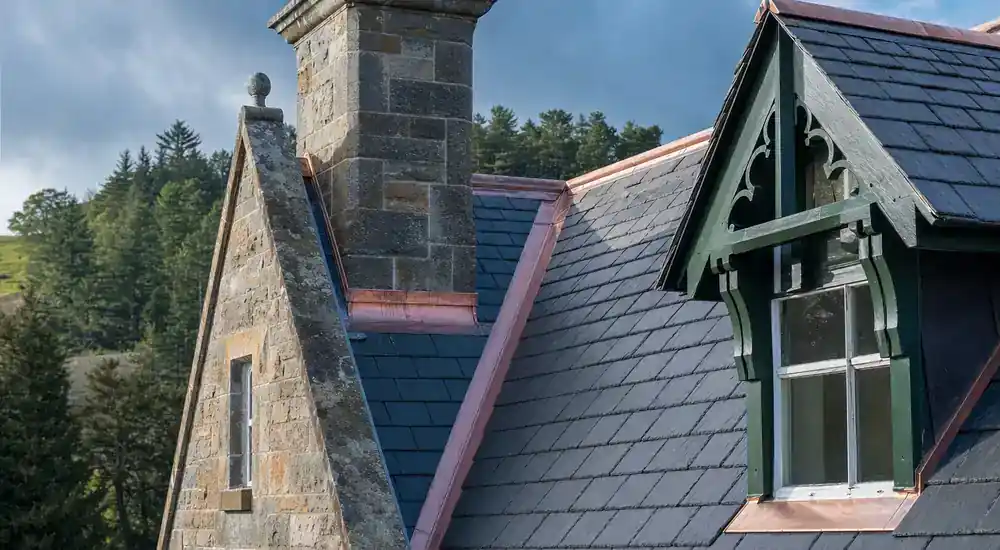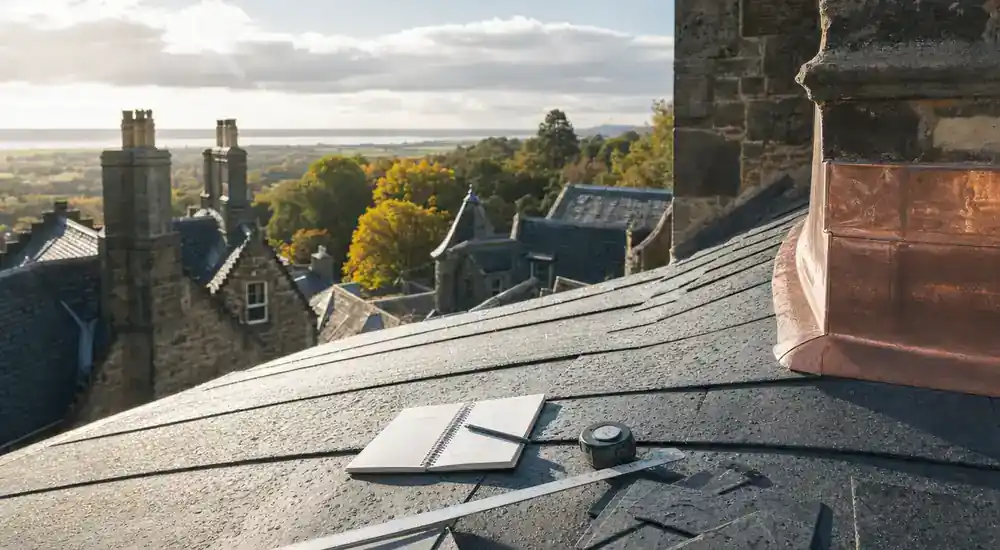
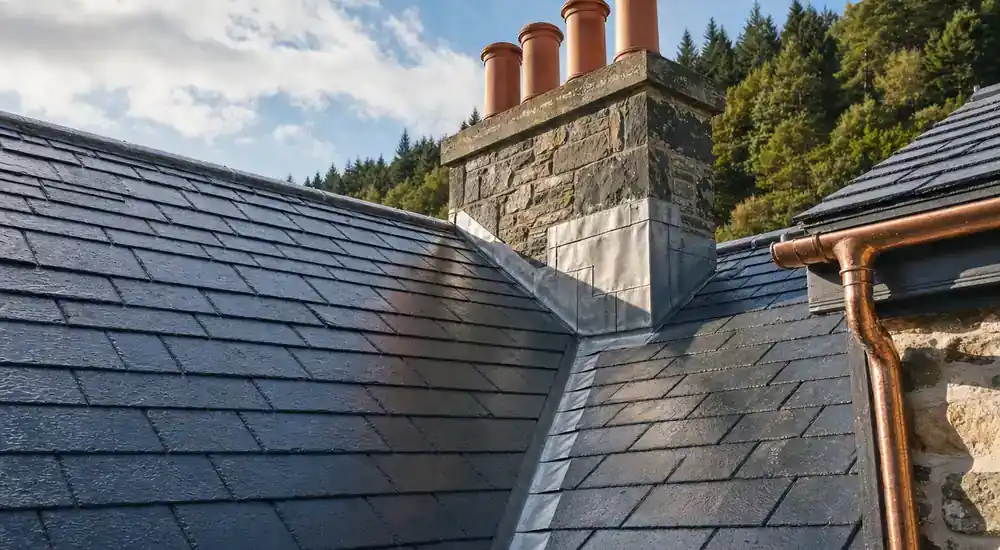
A careful repair plan considers maintenance, consent, traditional materials and survey findings before deciding whether the roof needs localised work, staged maintenance or a larger conservation-sensitive repair.
Decision summary
- Keep the heritage roofing hub as the main service page and use this guide when you need background before requesting an inspection.
- For listed buildings or conservation settings, check with the local planning authority before changing materials, roof appearance or significant details.
- Survey-led repair is usually safer than quick replacement: record slate, leadwork, chimneys, gutters, lime mortar and access before specifying the work.
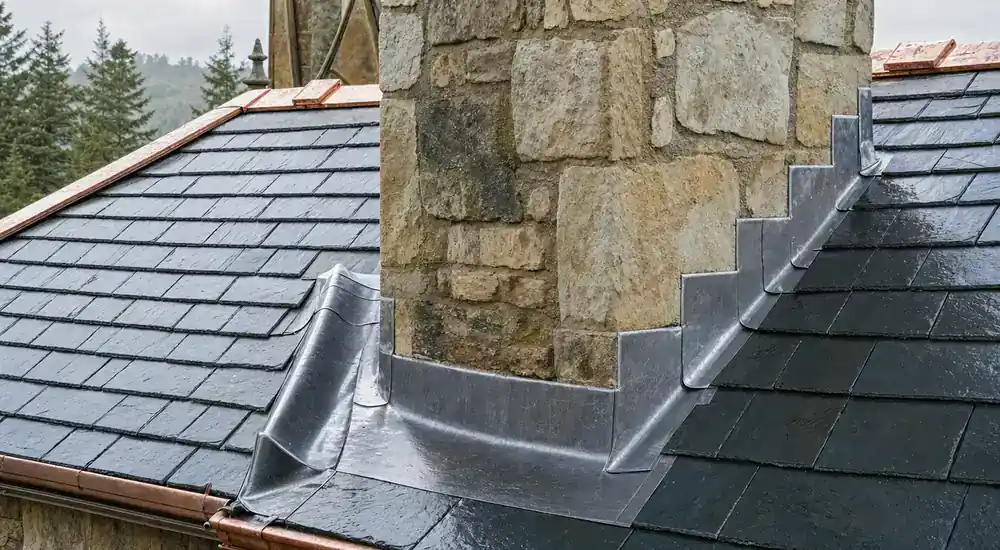
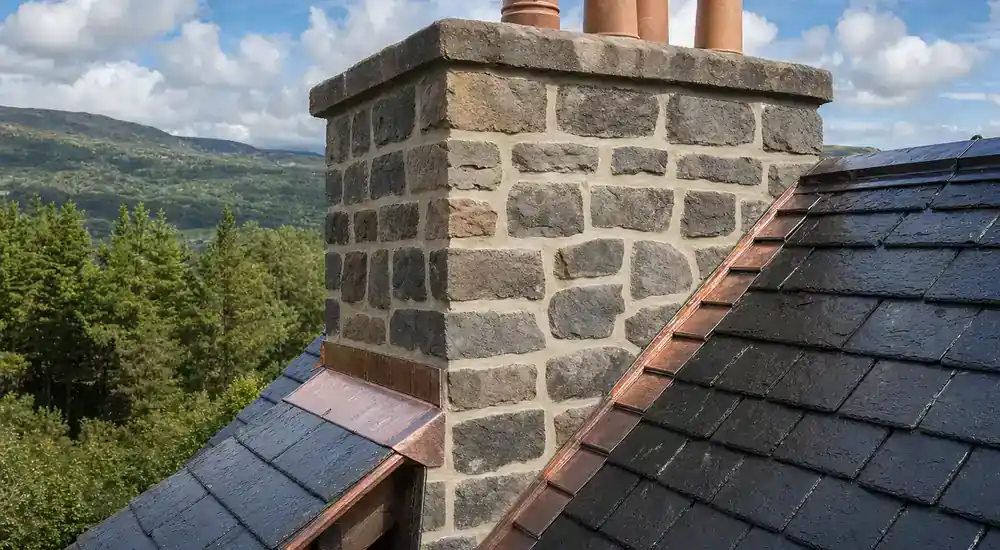
What makes a Scottish heritage roof different
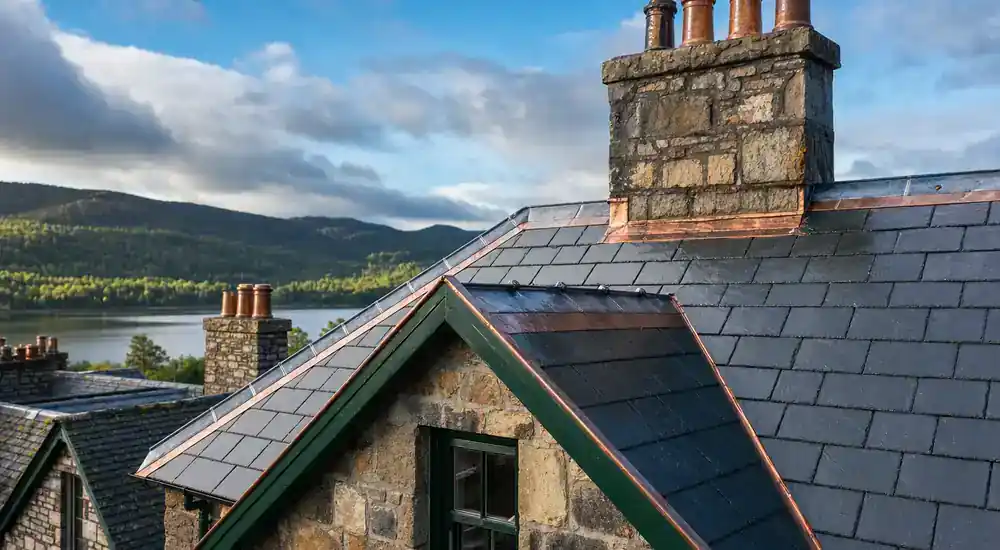
Many traditional Scottish roofs combine natural slate, timber sarking, lead junctions, stone chimneys, cast iron rainwater goods and lime mortar details. Those parts work together, so a visible leak may not be caused by the roof covering alone.
A heritage roof also contributes to the wider roofscape. On tenements, townhouses, churches, public buildings, farm steadings and older homes, the profile, slate pattern, chimney details and leadwork can all affect the building's character.
Listed buildings and conservation areas in Scotland
In Scotland, listed building consent is handled through the planning authority. Historic Environment Scotland explains that consent is used when changes to listed buildings need to be assessed for their effect on character. Like-for-like repair may be straightforward, but owners should still check before starting work.
Conservation areas are also a local authority matter. The safest practical rule is simple: if the building is listed, in a conservation area or part of a traditional terrace, ask the council whether the proposed roof work could need consent before changing materials, colour, profile or visible detailing.
- Do not assume a modern substitute is like-for-like because it is the same colour.
- Keep records of photos, survey findings, proposed materials and roof details.
- Use council or conservation advice early when the scope is more than small maintenance.
Common defects to look for
The first sign may be a damp patch, but older roofs usually need a broader check. Slipped slates, failed nails, cracked lead, blocked valleys, loose chimney cans, open mortar joints and overflowing gutters can all move water into the building fabric.
Scottish weather adds pressure through wind-driven rain, freeze-thaw cycles, moss growth and exposed coastal or upland conditions. Small defects can become expensive when water tracks into timber, masonry or plaster over several storms.
- Missing, slipped or delaminating slate.
- Cracked, lifted or poorly patched leadwork.
- Open joints around chimneys, skews, ridges or parapets.
- Blocked gutters, rhones, downpipes, valleys and outlets.
- Staining, damp smells or staining in lofts and top-floor rooms.
Repair or replacement: how to decide
Repair is usually the first question on a heritage roof, because unnecessary replacement can remove serviceable fabric and alter the appearance of the building. Replacement may still be needed where slate has reached the end of its life, fixings have failed widely or previous repairs have made the roof unreliable.
The decision should come from evidence rather than a quick visual quote. A survey should separate urgent weatherproofing from planned repairs, then explain which materials can be retained, matched, replaced or monitored.
Traditional materials: slate, lead and lime
The Engine Shed, part of Historic Environment Scotland, notes that many traditional Scottish buildings use local slate and that Scottish slate has not been quarried since the 1950s. That makes matching, salvage and careful repair important where original slate remains sound.
Leadwork should be assessed alongside slate, chimneys and masonry because failures often happen at junctions. Lime mortar repairs may also be needed around chimneys, skews, ridges or parapets where hard cement patches can be visually and physically unsuitable for older fabric.
Maintenance in Scottish weather
Maintenance protects heritage roofs by catching small faults before they become structural or internal problems. Historic Environment Scotland recommends looking at related areas together, such as roof slates, chimney masonry, chimney cans and other roofing elements.
A practical Scottish maintenance routine should include post-winter checks, autumn gutter clearance, storm follow-up inspections and regular review of leadwork, chimneys, valleys and internal damp signs.
- After winter: check for displaced slate, cracked lead and loose mortar.
- After high winds: look for new debris, slipped materials and water staining.
- Autumn: clear gutters and downpipes before persistent rain.
- Before planned work: photograph details so repairs can be matched and recorded.
What a heritage roof survey should include
A good heritage roof survey should document roof covering, leadwork, chimneys, mortar, gutters, valleys, roof void signs, access, previous repairs and the likely source of water entry. It should also flag whether consent or council advice may be needed before materials change.
The output should be practical: urgent make-safe needs, repair priorities, material notes, access constraints and a clear repair specification. That is especially useful for listed buildings, churches, shared tenements, commercial heritage properties and older homes being prepared for sale or refurbishment.
When to request specialist help
Arrange an appropriately scoped inspection when water is entering the building, when the roof is listed or conservation-sensitive, when materials need careful matching or when previous modern repairs may be contributing to defects.
Use the recorded condition, access limits and consent context to choose between listed-building repair, slate work, leadwork, lime detailing, further investigation or a maintenance plan. Ask the planning authority before work that may affect listed character.
Official guidance and references
- Historic Environment Scotland: listed building and conservation area consent Current Scottish guidance on changes to listed buildings, conservation areas and the planning authority's role.
- Historic Environment Scotland: listed building consent process Official explanation of applications, planning authority decisions and consultation in the consent process.
- Historic Environment Scotland: traditional building maintenance Official advice on inspection plans, connected defects, maintenance records and safe observation of traditional buildings.
- Historic Environment Scotland: traditional building repairs Official guidance on finding causes, specifying compatible repairs, retaining fabric and recording work.
- Engine Shed: slate roofs Historic Environment Scotland guidance on Scottish slate inspection, repair, reuse, matching and permissions.
- Engine Shed: roofing leadwork Historic Environment Scotland guidance on lead junctions, movement, defects, maintenance and repair specification.
- HSE: roof work Official roof-work guidance covering safe access, roof edges, weather and fragile materials.