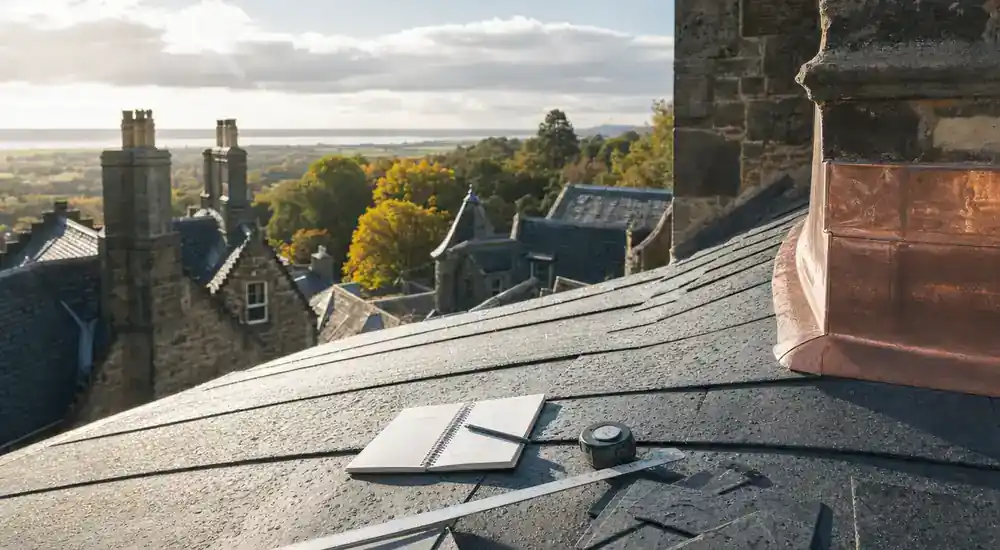
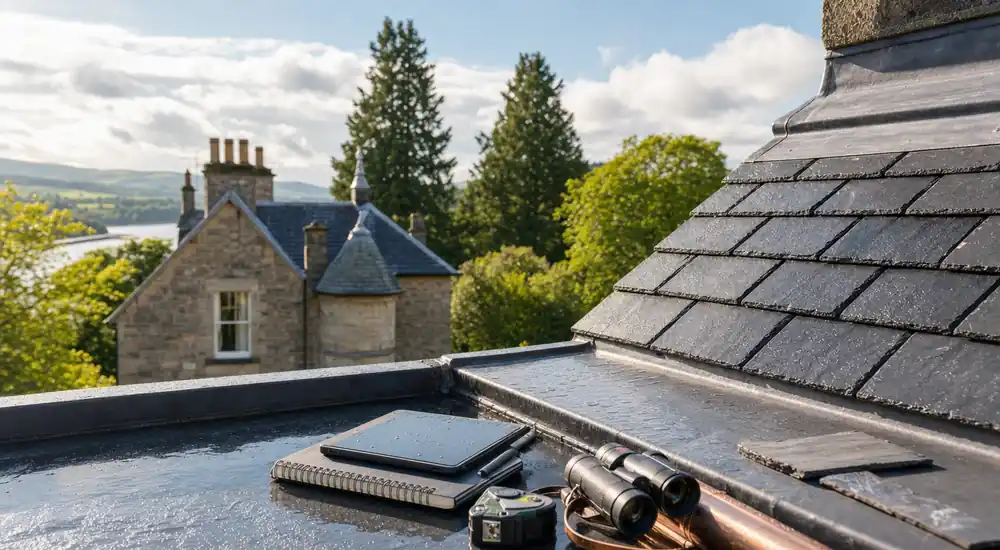
Check whether mortar is part of the leak
Failed joints can admit or hold water, but overflowing gutters, cracked lead, loose masonry or damaged slate may create the same internal symptom. Follow the likely water path before choosing repointing alone.
The pattern of damp, exposure and condition of neighbouring details can show whether the problem is contained or part of a wider roof fault.
Understand the existing masonry and mortar
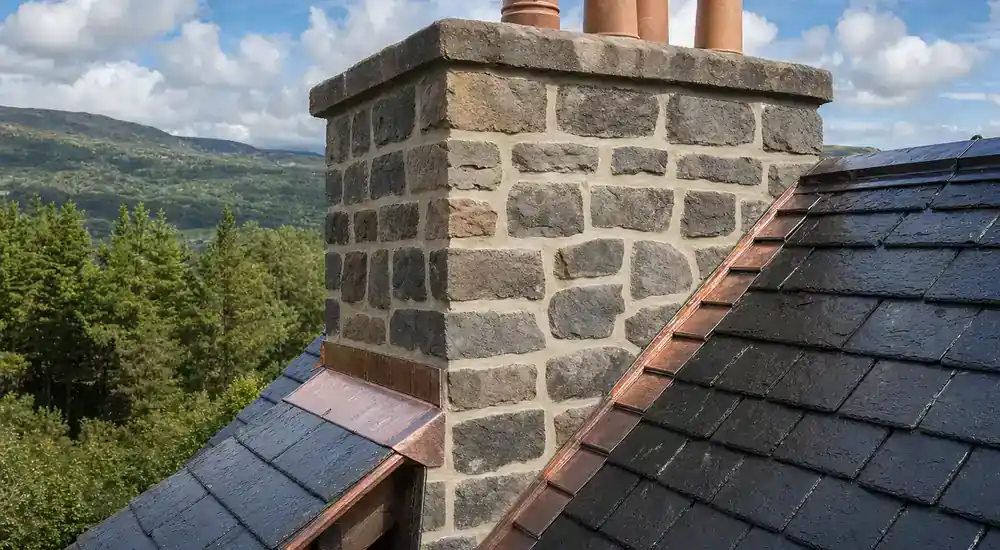
Stone or brick type, joint width, finish, aggregate and earlier cement-rich patches can affect the repair choice. Not every pale or soft joint is the same type of lime mortar.
Loose faces, saturation, salts, cracks and detached areas may require more than repointing. Material analysis can be useful where the original mix or later layers cannot be distinguished.
Choose a compatible mix and finish
A suitable mortar depends on masonry, exposure, joint form, moisture movement and required finish. Strength is only one consideration, and there is no universal lime mix for every roof detail.
Historic Environment Scotland warns that incompatible cement-rich mortar can contribute to decay in traditional masonry. A small sample area can test colour, texture and finish before wider work.
Remove failed material without harming sound fabric
Removal should target the agreed failed or incompatible areas without widening joints or breaking stone edges. Loose masonry may need separate advice before repointing starts.
A trial area can reveal hidden voids, buried flashings or a different earlier layer. Sound historic mortar should not be removed merely to make every joint look new.
Allow for weather, curing and roof interfaces
Lime work needs protection from rapid drying, heavy rain, frost and disturbance. Conditions, access and the chosen mix can make a fixed programme unreliable.
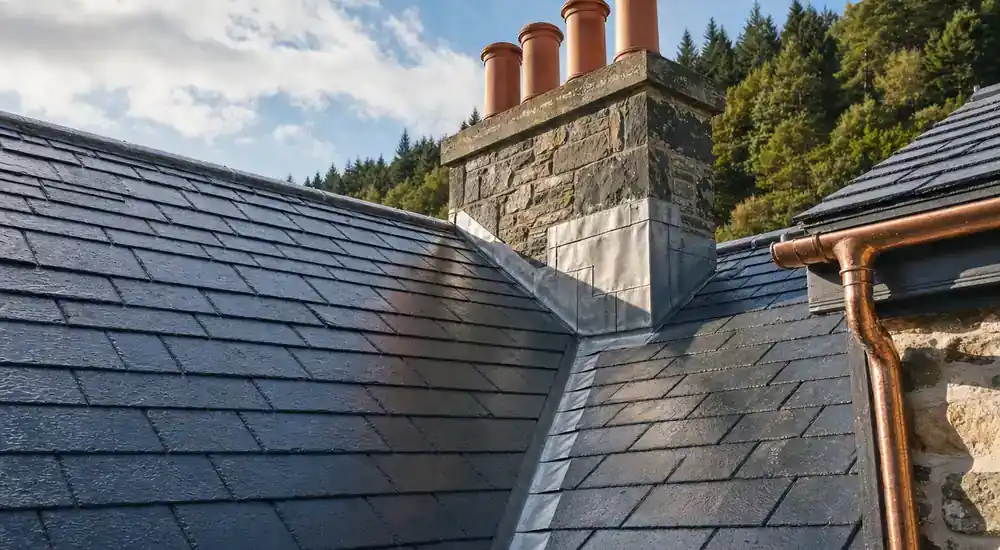
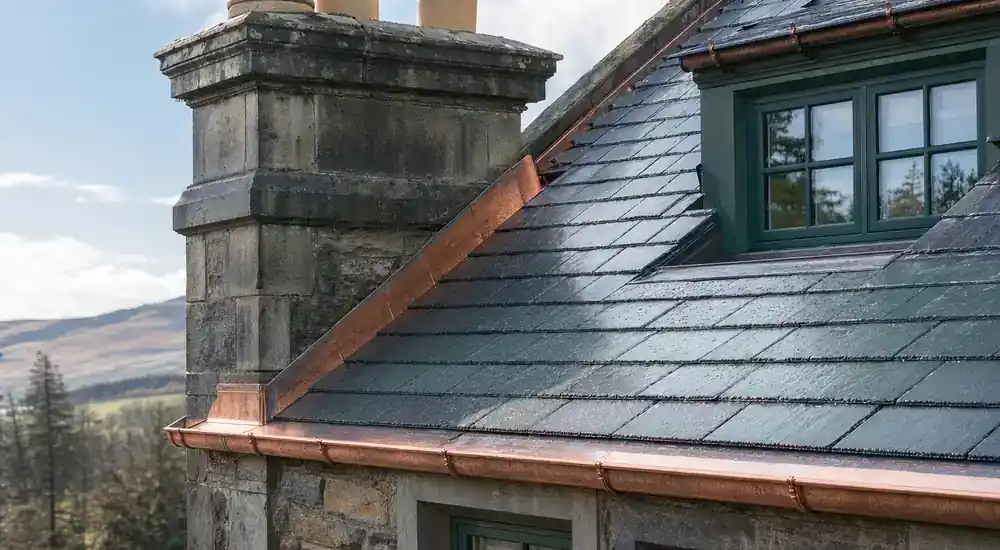
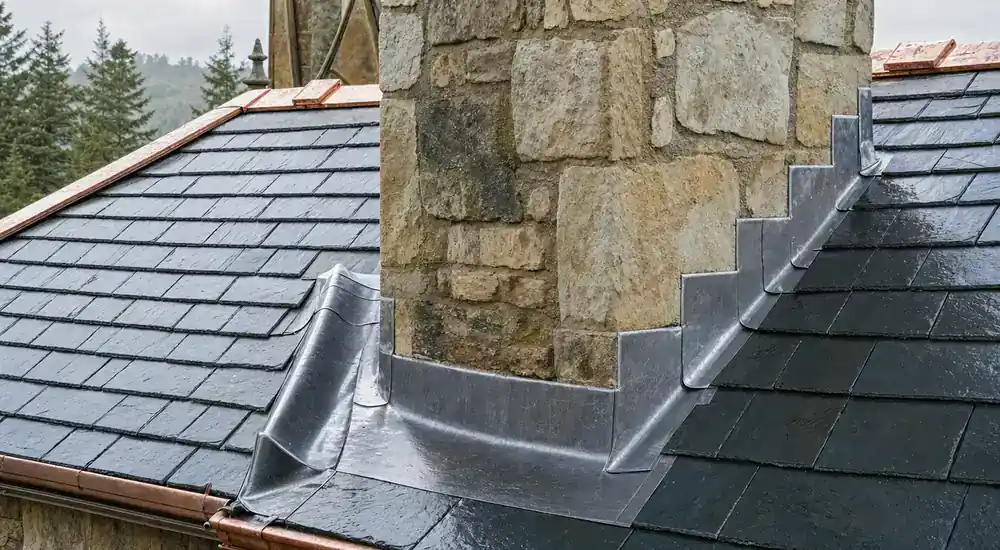
Mortar beside slate and lead must be sequenced carefully. Repointing above a blocked gutter or over a failed flashing will not resolve the connected water problem.
Check appearance, consent and the wider repair
Mortar colour, profile and extent can affect a protected building's appearance. Ask the planning authority about the actual proposal where consent is uncertain.
Compare the final scope by cause, removal boundary, mix, finish, weather protection and adjoining slate or lead work. Check material experience, availability and weather protections before choosing who carries it out.
Decide what to check next for lime mortar roof repairs
Before choosing lime mortar roof repairs, note the visible defect, when it appears, nearby junctions and any safe indoor signs. If the cause remains unclear, request a roof inspection that distinguishes a local repair from a wider issue; do not climb onto the roof to investigate.