Deal safely with loose slate and active leaks
Keep people away from areas where slate may fall and do not climb onto the roof. Internal staining, weather timing and safe ground-level views can help distinguish an active change from an older mark.
A temporary measure may be appropriate where water is entering, but it should not be treated as the permanent answer until the cause and the condition around it are understood.
Decide whether the failure is local or widespread
One broken slate can be a local defect. Repeated slippage across several slopes may point to fixing corrosion, nail sickness, poor earlier work or movement in the support beneath.
Compare the number, pattern and location of failures. Valleys, ridges, skews and abutments may create a different problem from field slates in the middle of a sound slope.
Match replacement slate beyond surface colour
Size, thickness, texture, colour range, edge character and laying pattern affect how replacement slate sits and weathers. Scottish roofs can also have diminishing courses or deliberate variation.
A close visual match that is too thick or differently sized can disrupt laps and junctions. The Engine Shed advises careful matching and reuse of sound slate where practical.
Check fixings, support and concealed condition
The visible slate is only one layer. Fixings, battens or sarking, underlay where present and ventilation can influence whether local replacement will remain secure.
Opening-up should be limited to a clear question and protected from weather. If concealed decay or widespread fixing failure appears, the repair boundary may need to change.
Treat valleys, lead and masonry as part of the slate repair
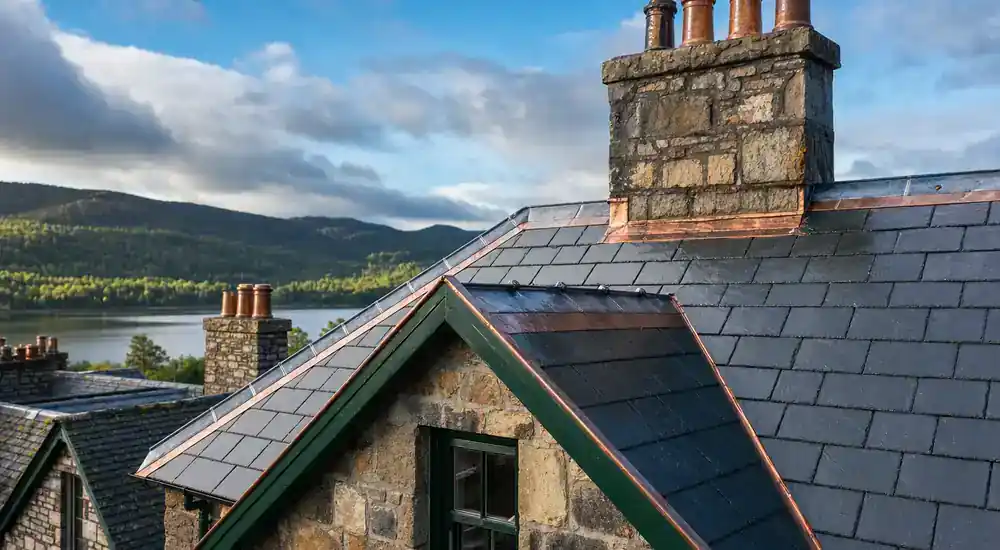
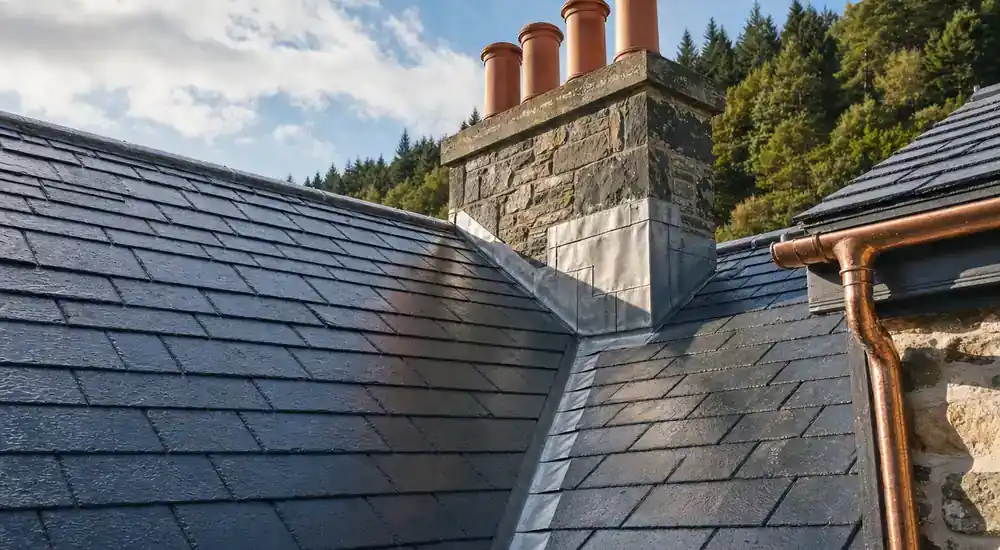
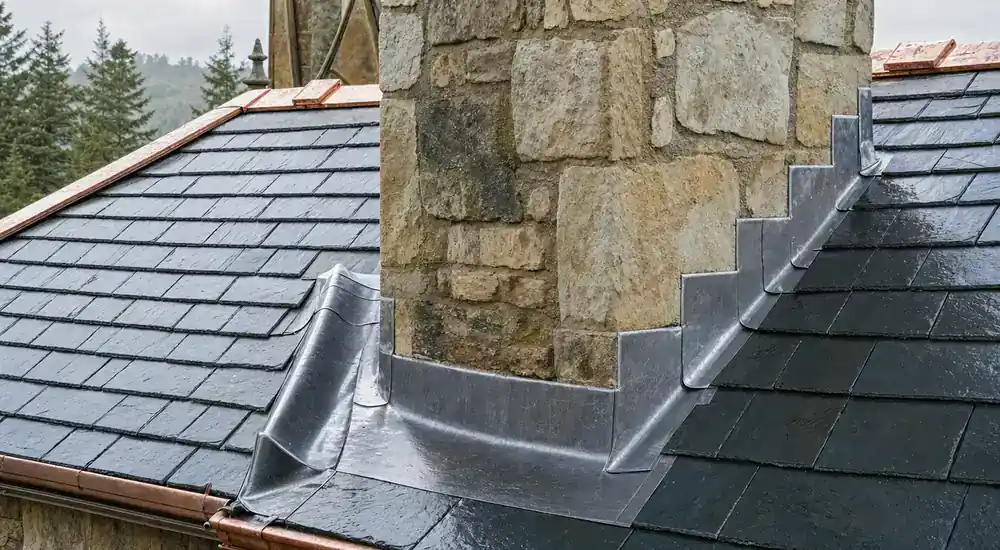
Slates rely on ridges, valleys, flashings, gutters, chimneys and skews to move water away. A repair can fail if the slate is replaced while an adjoining lead or mortar detail remains defective.
The order of work matters. Masonry stability, lead movement and drainage should be settled before sound slate is repeatedly lifted around the same junction.
Compare local repair, salvage and re-slating
Local work may suit a contained failure with serviceable surrounding slate and fixings. Wider lifting and re-slating may be considered where defects are repeated or the support and fixings have failed across a slope.
Check retention, matching, salvage, access and consent before agreeing the extent. Ask any company you approach to substantiate experience with the slate and roof type involved.
Decide what to check next for traditional slate roofing
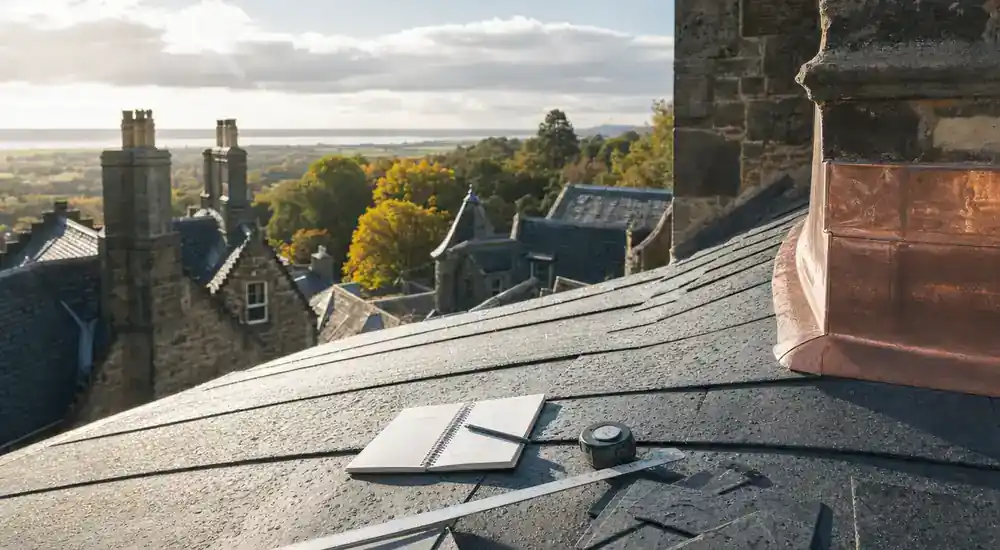
Before choosing traditional slate roofing, note the visible defect, when it appears, nearby junctions and any safe indoor signs. If the cause remains unclear, request a roof inspection that distinguishes a local repair from a wider issue; do not climb onto the roof to investigate.