Protect people, interiors and continued use
Keep people away from unsafe ceilings, falling material and water near electrics. Organs, memorials, archives and decorated interiors may need protection from both the leak and any temporary covering above.
Worship, community events and public access can affect when inspection or repair is possible. The first decision is whether an area must close, can remain in limited use or needs short-term weather protection while the cause is investigated.
Know who can authorise the next step
Ownership and authority may sit with a congregation, denomination, trust, community body, factor or local authority. Confirm who can approve close access, temporary measures, opening-up and permanent work before commitments are made.
If several people must agree, use clear roof-zone photographs and options tied to cost and urgency. This helps trustees distinguish an immediate protection decision from a later capital repair.
Understand the consent and exemption position
Listing, conservation status, present use and denominational arrangements can affect the approval route. Historic Environment Scotland explains that ecclesiastical exemption may apply in some circumstances, but it does not remove every planning question.
The local authority should advise whether listed building consent applies to the actual proposal. A change of use, ended worship or alteration to significant slate, lead, masonry or roof form can change the position.
Follow the complete high-level water path
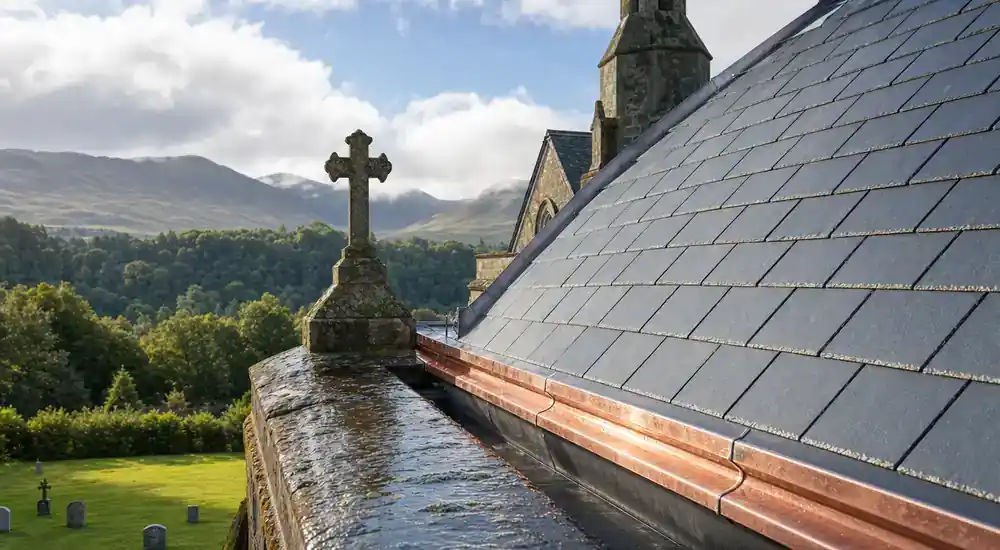
Church roofs often combine long slopes, towers, parapets, valley gutters, lead flats, abutments and several drainage levels. Water seen inside may have travelled far from the point of entry.
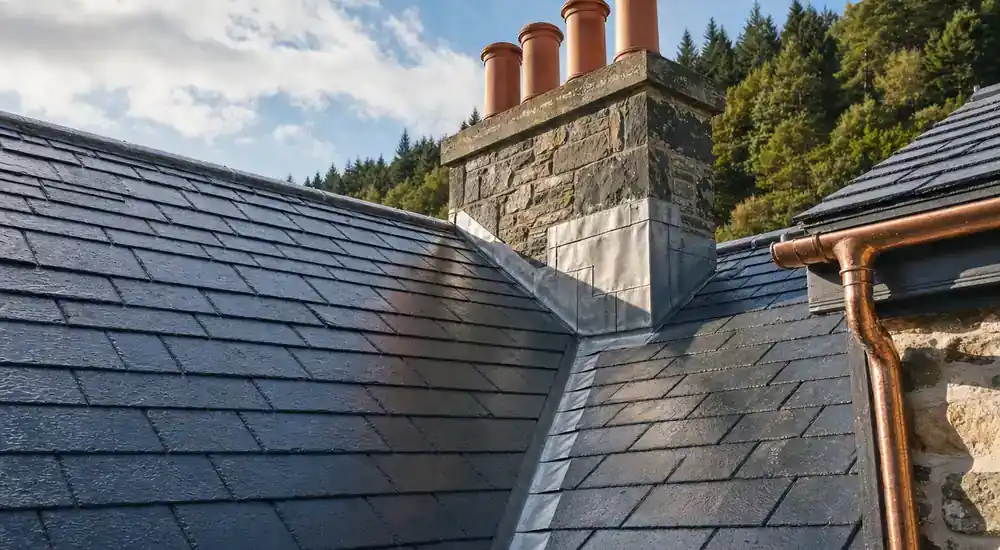
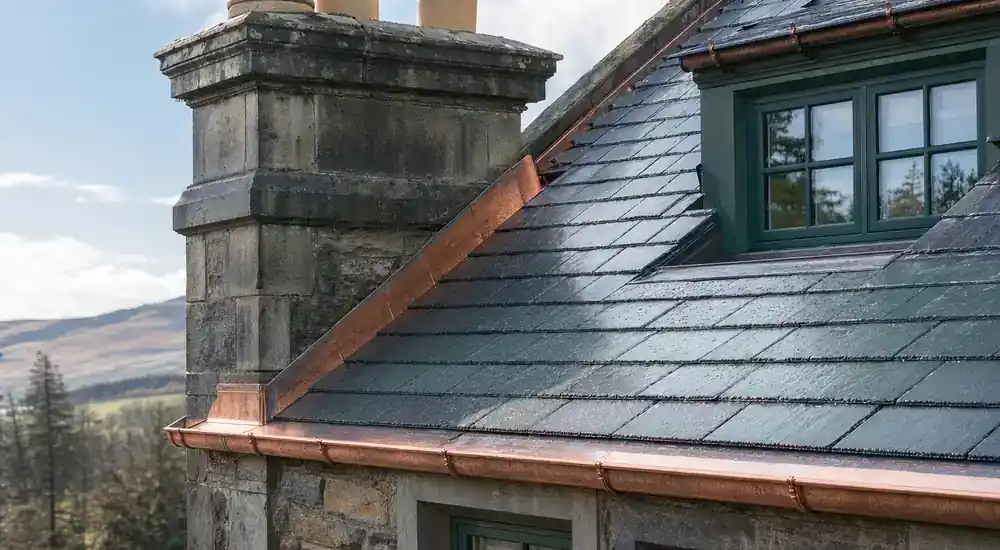
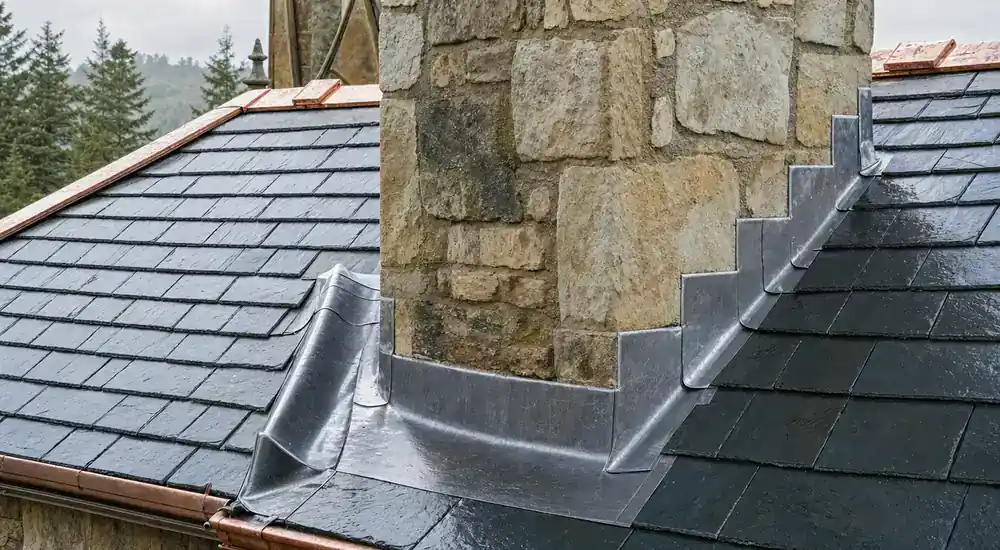
Look at outlets, overflows, downpipes, wallheads and the interfaces between slate, lead, stone and mortar. A repair centred on one internal stain can miss a blocked or failed detail higher in the system.
Use safe access and phased repair choices
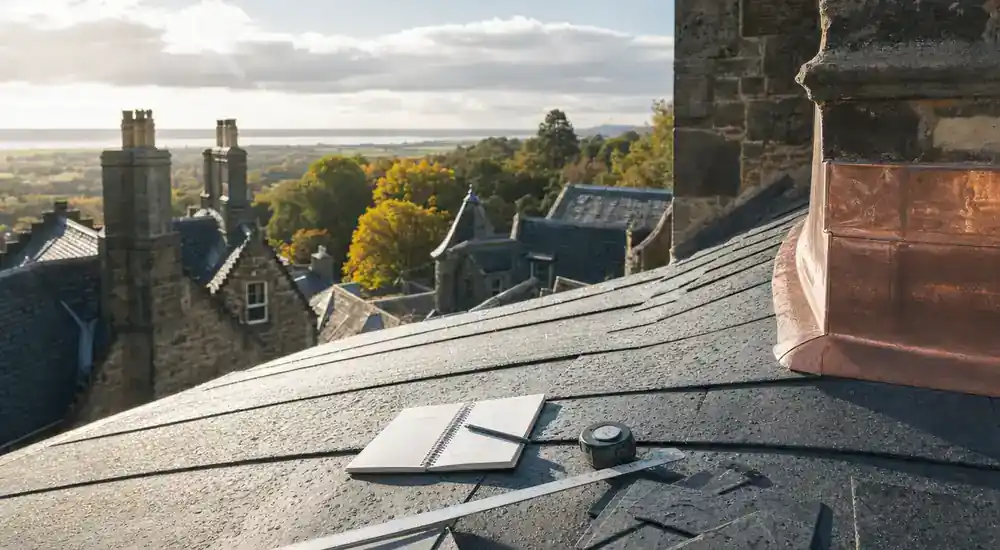
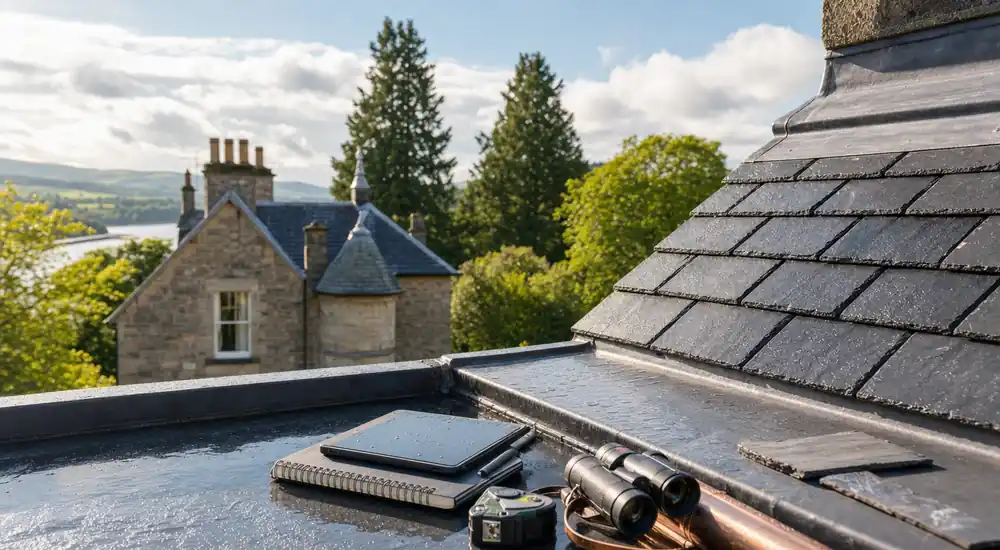
Ground views, roof voids and existing access can answer some questions before fragile slate or high-level gutters are approached. Towers, multiple elevations and occupied areas may make a staged investigation safer and easier to fund.
Group work by urgent protection, contained repair, planned maintenance and any larger renewal. Clearing drainage may come first; masonry stability may need specialist input before lead is disturbed; slate work may depend on hidden fixing condition.
Move from condition findings to an agreed scope
A useful proposal connects each roof zone to the defect, consequence, next action, access method and approval question. It should also show how slate, lead, mortar and drainage meet rather than splitting them into unrelated trade packages.
Compare proposals on cause, priority, retained fabric, phasing and uncertainty. Confirm relevant experience, availability, price and timing directly before the trustees or owners make a commitment.
Decide what to check next for church roof repairs
Before choosing church roof repairs, note the visible defect, when it appears, nearby junctions and any safe indoor signs. If the cause remains unclear, request a roof inspection that distinguishes a local repair from a wider issue; do not climb onto the roof to investigate.