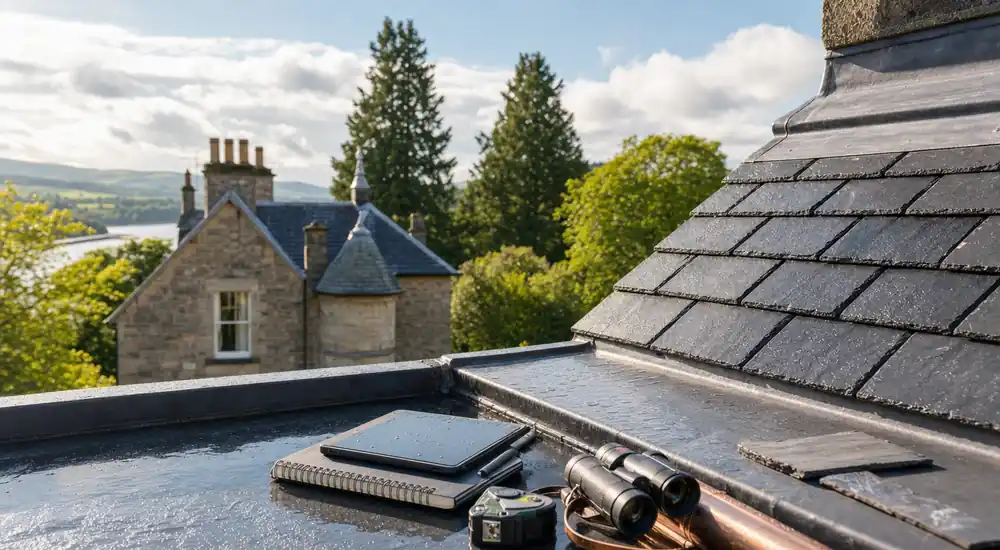
Solve the cause rather than treating age as failure
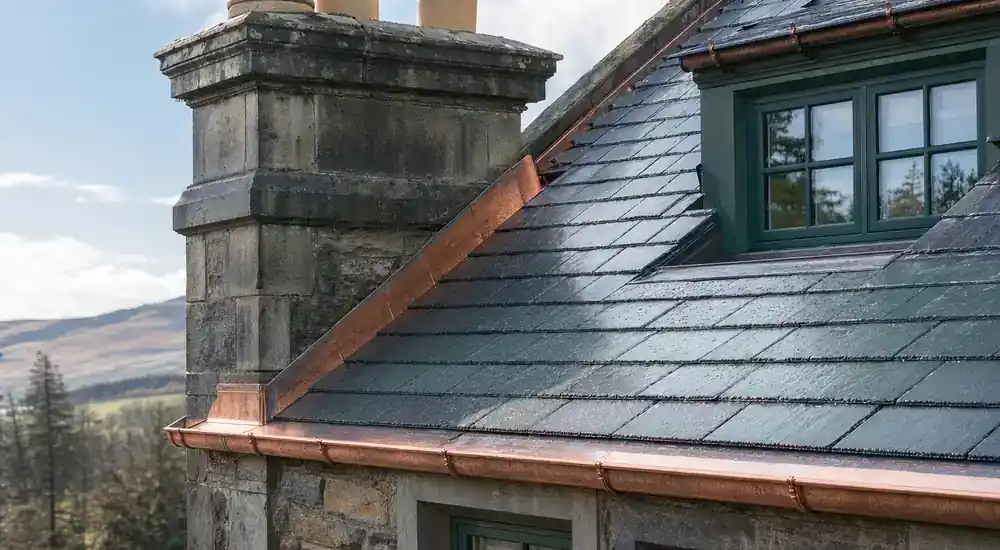
A stain or slipped slate may relate to the covering, drainage, lead, masonry, condensation or water travelling from a higher junction. Trace the route from collection to discharge before choosing a material or repair area.
Old fabric is not automatically defective, and a small visible fault does not prove the rest of the roof is sound. Condition, exposure and connected details matter more than age alone.
Choose the smallest repair that resolves the problem
Maintenance, local repair, selective renewal and broader reinstatement should be compared against the diagnosed cause. Clearing an outlet or repairing a contained junction may protect more fabric than dismantling a wide area.
Minimum intervention does not mean leaving a known failure untreated. The proposal should show why the chosen extent is sufficient and what finding would justify expanding it.
Keep compatible materials working together
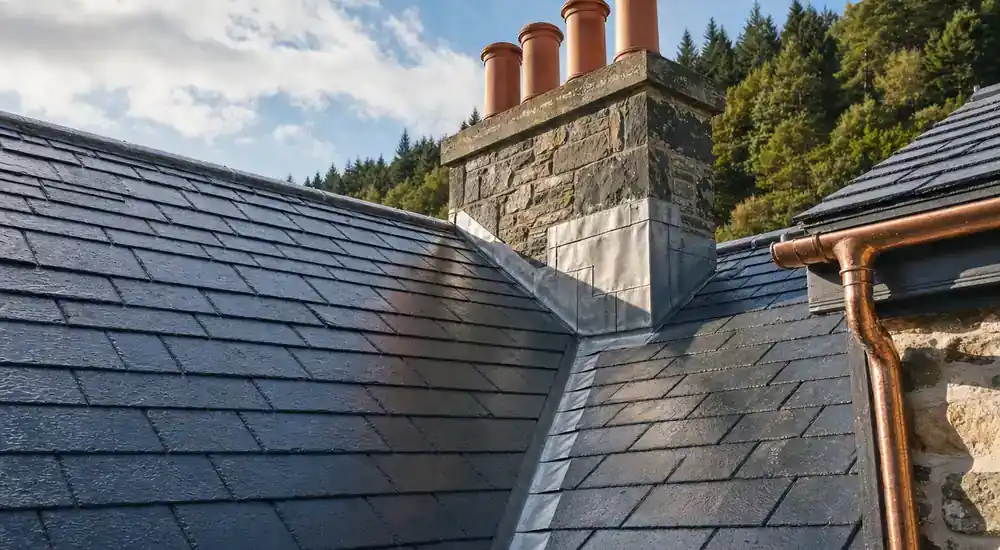
Traditional slate, lead, lime mortar, timber and stone manage moisture in different ways. An incompatible hard mortar, trapped lead, unsuitable membrane or poorly matched slate can move the problem rather than solve it.
Compare performance, movement, breathability, exposure and junction design as well as appearance. A sample can help with slate or mortar matching where variation is part of the existing roof.
Check status and permissions before visible change
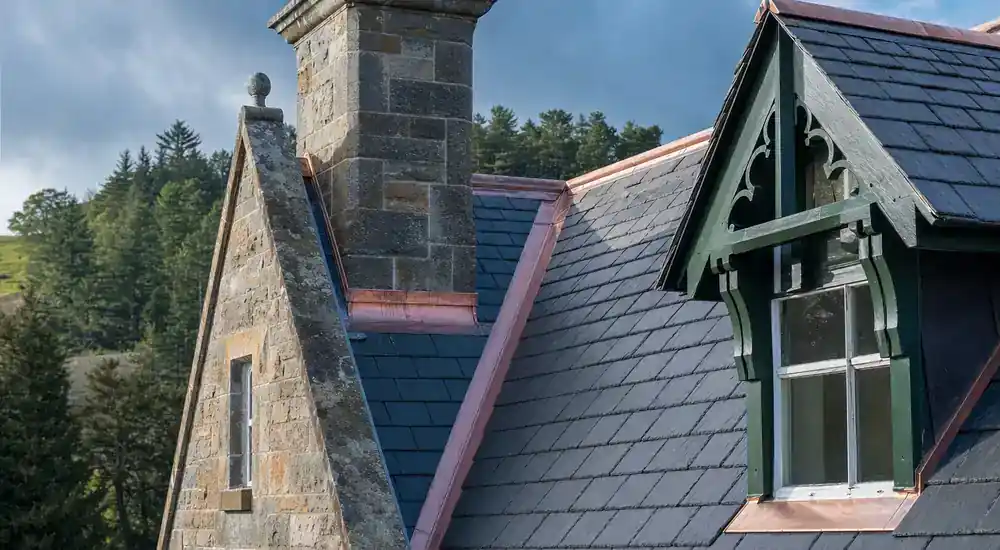
A building can be listed, stand in a conservation area or simply have traditional construction worth retaining. Legal status affects approvals, while significance and condition guide the repair choice.
Ask the planning authority about the actual change where consent is uncertain. Material source, finish, profile, extent and rooflight or drainage alterations may all be relevant.
Protect the roof during opening and repair
Fragile coverings, occupied rooms, vulnerable interiors and uncertain weather can make sequencing as important as the final material. Open only the area that can be protected and closed safely.
Sound salvaged slate and other reusable fabric should be kept secure and traceable to its roof area. Temporary measures should have a clear purpose and removal point.
Compare proposals by outcomes and limits
Look for a clear cause, repair boundary, retained fabric, material match, access assumptions and future maintenance need. Wider renewal should be supported by condition, not a general claim that an old roof has reached the end of its life.
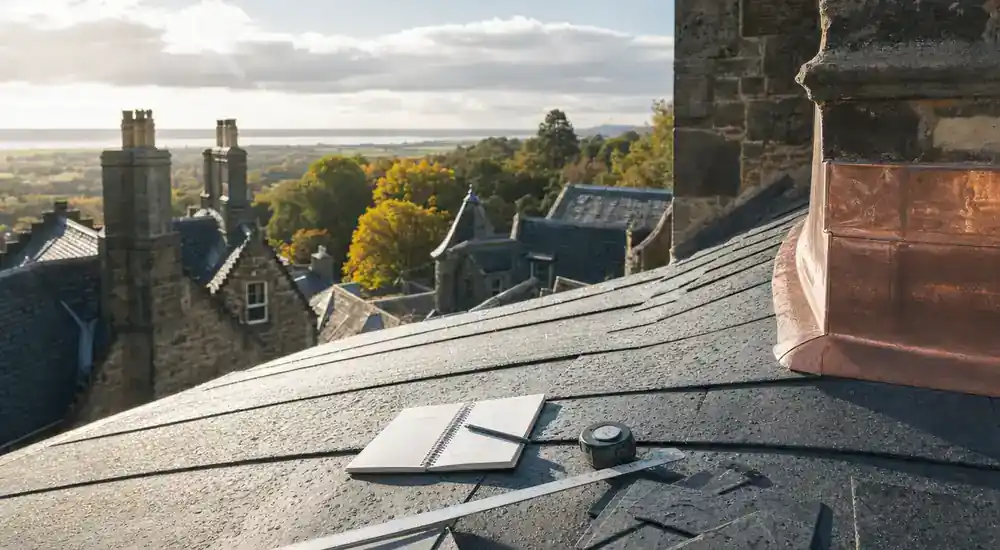
Where the condition remains uncertain, a survey can narrow the options before price and method are fixed. Ask any company you are considering to substantiate experience with the relevant materials and building type.
Decide what to check next for conservation roofing
Before choosing conservation roofing, note the visible defect, when it appears, nearby junctions and any safe indoor signs. If the cause remains unclear, request a roof inspection that distinguishes a local repair from a wider issue; do not climb onto the roof to investigate.