Find which lead detail is affecting the roof
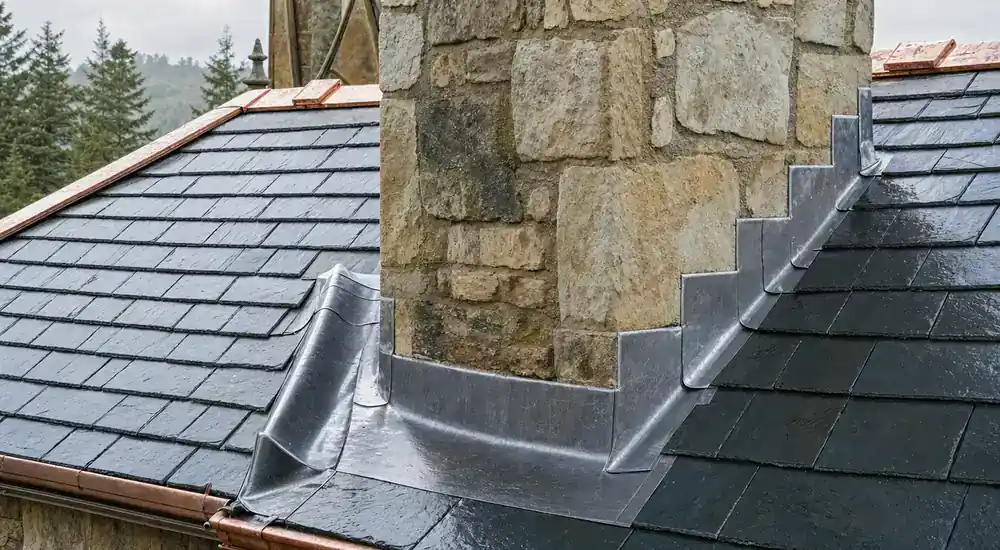
Aprons, soakers, valleys, parapet gutters and lead flats perform different jobs. Internal damp does not show which one has failed, and water may travel along masonry or the roof build-up.
Check discharge, staining, splits, lifted edges and nearby slate or mortar from safe positions. A blocked outlet or loose adjoining slate can imitate a lead failure.
Understand movement before sealing a split
Lead expands and contracts as temperature changes. Oversized sheets, restricted edges, unsuitable fixings or poor support can concentrate movement and cause repeated cracking.
A seal may be temporary if the underlying layout remains unchanged. Permanent work should address the lead detail's function, falls, sheet divisions, joints and movement. Repeated cracking in the same place can be a sign that movement remains concentrated rather than a series of unrelated punctures.
Choose between local repair and renewal
A contained defect can sometimes be repaired where sound margins, support and adjoining details remain serviceable. Several splits, recurring patches or a flawed sheet layout can point to local or wider renewal.
Age alone does not settle the choice. Compare condition, defect pattern, design and the consequences of disturbing nearby historic material.
Check slate, stone, mortar and support
Lead depends on the materials around it. Damaged sarking, loose slate, open masonry, hard mortar, trapped moisture or contact with another metal can affect performance.
Settle these interfaces and the order of work before fabrication. New lead will not correct a blocked water path or an unstable edge beneath it.
Protect high-level gutters and occupied rooms
Lead gutters and flats can sit in concealed or difficult positions beside fragile coverings. Safe access, interior protection and temporary drainage may be needed while a detail is open.
Weather, removal, storage, recycling and any hot-work risk can affect method and timing. These are property-specific matters that should be settled before work starts.
Check the detail and consent position before agreement
Compare the existing layout with the proposed sheet sizes, code, joints, clips, underlay, falls and discharge. Changes may need planning-authority advice where they affect a protected building's character.
If the exact defect or support remains uncertain, closer inspection may be needed before a firm method or price is sensible. Check relevant technical experience and availability before agreeing access or work.
Decide what to check next for leadwork for heritage buildings
Before choosing leadwork for heritage buildings, note the visible defect, when it appears, nearby junctions and any safe indoor signs. If the cause remains unclear, request a roof inspection that distinguishes a local repair from a wider issue; do not climb onto the roof to investigate.