Choose a survey when the next decision is unclear
A survey may help investigate water entry, compare local repair with wider renewal, plan maintenance, consider a purchase or understand a traditional material. The purpose affects the access and depth needed.
A general condition view may not answer a detailed leak or specification question. Decide what choice the findings must support before comparing survey options.
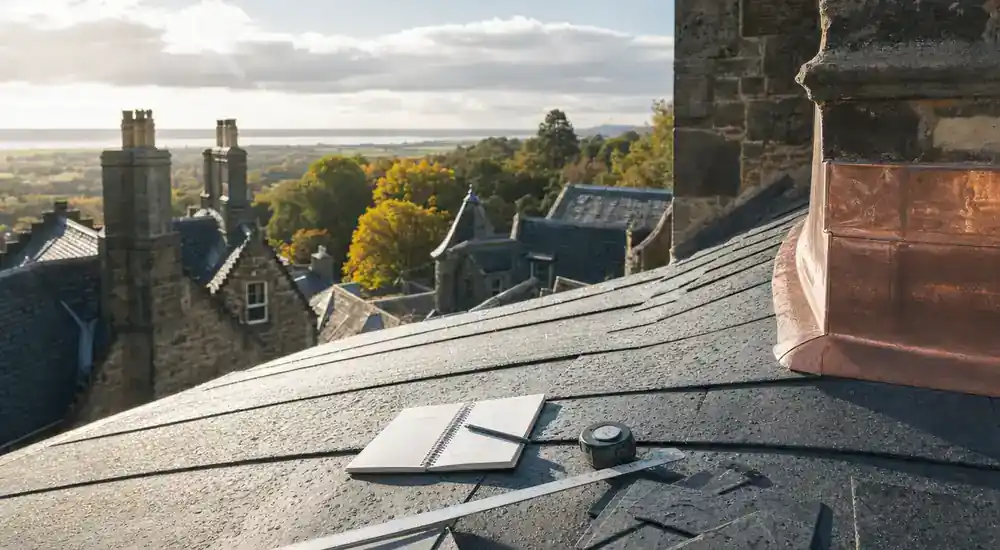
Match access to the parts of the roof that matter
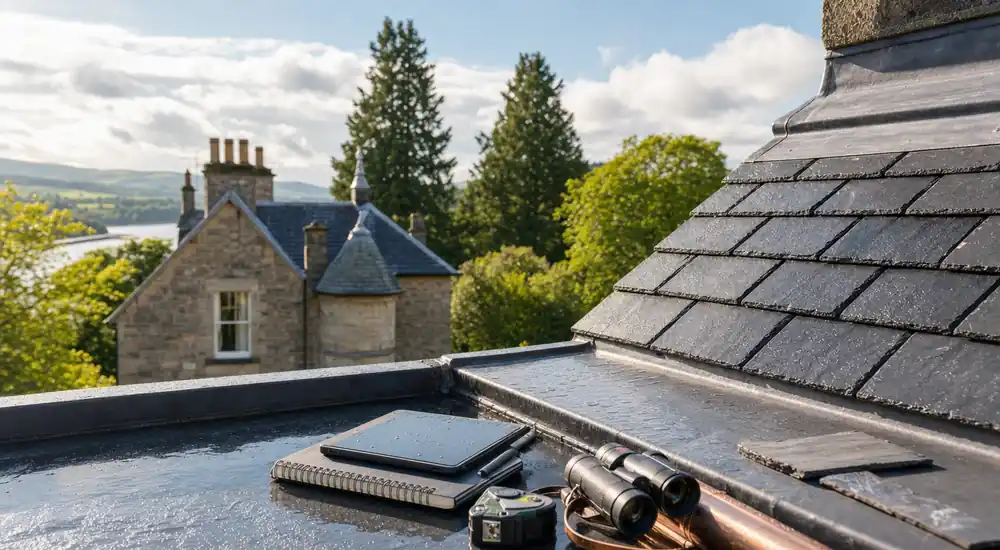
Ground views, interior rooms, roof voids, existing hatches, close access and drone imagery reveal different things. None should be treated as a view of concealed support or every high-level junction.
The survey should state which slopes, valleys, gutters, parapets and hidden spaces were not seen. If a limit affects the main question, targeted access or opening-up may be worth considering.
Look at the roof as one connected water system
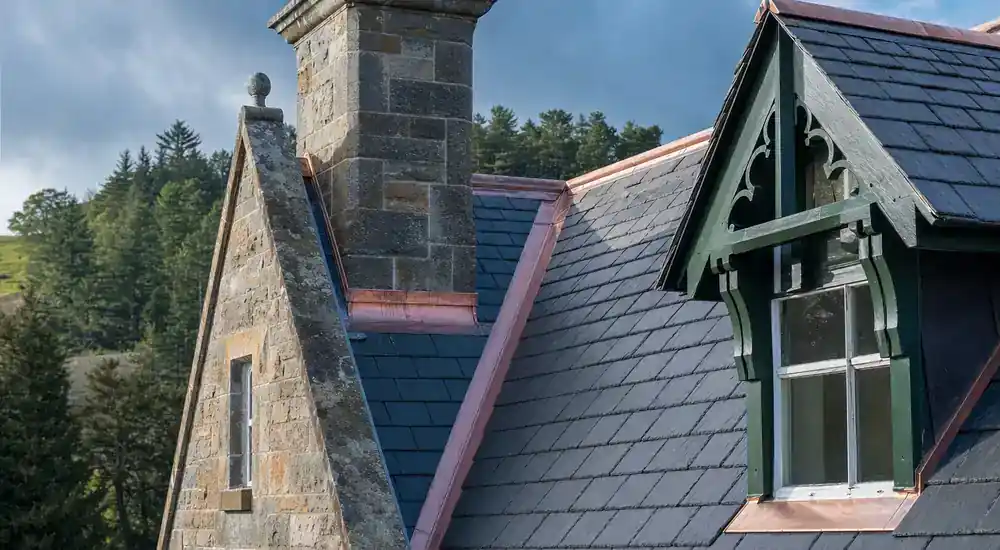
Coverings, ridges, valleys, leadwork, chimneys, skews, parapets, gutters, outlets and masonry can all influence the same damp patch. Internal staining can also be historic or unrelated to the nearest external defect.
Findings should connect locations, defect patterns and likely water routes. This helps distinguish a contained repair from monitoring, maintenance or further investigation.
Understand what was seen and what remains uncertain
A useful report distinguishes direct observations from likely causes and unknown concealed conditions. Photographs tied to roof zones make those limits easier to understand.
Further investigation should answer a specific uncertainty that could change the repair choice. A long caveat list without priorities is less useful than a clear explanation of confidence and alternatives.
Use findings to compare priorities and quotations
The report should separate immediate protection, short-term repair, planned maintenance and later investigation. Each item is easier to act on when it has a location, consequence and next action.
Where condition is sufficiently clear, material matching, retention, drainage and access assumptions can support comparable quotations. Where it is not, the missing inspection should be settled before a permanent method or price is fixed.
Keep survey findings separate from consent and guarantees
A survey can flag a permission question and show the detail under discussion, but it does not grant listed building consent. The planning authority decides what is needed for the proposal.
A visual survey cannot guarantee concealed condition, cost or repair success. Check the proposed survey scope, relevant competence and availability with whoever you are considering.
Decide what to check next for heritage roof surveys
Before choosing heritage roof surveys, note the visible defect, when it appears, nearby junctions and any safe indoor signs. If the cause remains unclear, request a roof inspection that distinguishes a local repair from a wider issue; do not climb onto the roof to investigate.