Make the inside area safer first
Stay clear of sagging ceilings, falling debris and wet electrical fittings. Do not puncture a ceiling bulge, enter an uncertain roof void or climb onto a wet or damaged roof. Move belongings only when this can be done without entering the affected area.
Use the appropriate emergency, utility or qualified safety service where there is immediate danger involving fire, collapse, live electrics or people. Keep the roofing decision for after the area is safe; urgent attendance is not guaranteed.
When roofing follow-up is appropriate
After the immediate danger has passed, note when the problem began, which rooms are affected and whether wind or rain changes it. A historic stain with no current moisture still needs diagnosis, but it has different priorities from an opening above an occupied room.
Location, weather, daylight, access and risk below affect what can be done. Temporary protection and permanent repair are separate decisions; neither should be promised from an online description.
Leak timing and roof details change the diagnosis
When the area is safe, the timing, weather pattern, affected rooms and any movement can help locate the likely slope. Interior or ground-level photographs may add context. A failed earlier patch can indicate that the visible defect was not the whole cause.
Urgent diagnosis still compares slate or tile, ridges, valleys, chimneys, flashings, flat-roof edges and outlets. Chimney-area water may come from masonry, lead or covering; ponding at an outlet differs from a membrane puncture.
Understand temporary protection and its limits
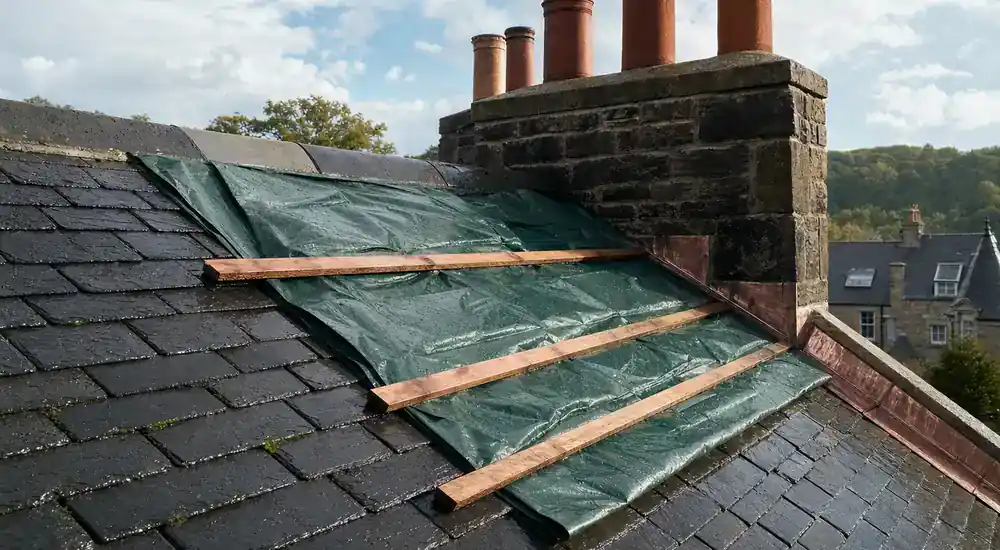
Temporary weatherproofing may be considered when permanent work cannot be diagnosed or completed safely. It is a holding measure, not evidence that the roof is sound, and must avoid creating a hazard, blocking drainage or damaging retainable material.
Record the treated area, limitations, warning signs and required follow-up. Wind, rain and movement can change performance. Reduced leakage is not a permanent outcome, so the next inspection must remain defined.
Connect the opening to the permanent repair choice
After immediate exposure is addressed, permanent work may involve the covering, lead, chimney masonry, a valley, drainage or a larger flat or pitched area. The choice follows what failed and its surroundings, not the temporary material.
Stabilisation should avoid unnecessary loss of sound slate, lead, stone or mortar. For listed or older fabric, use the heritage route and check whether changing a detail needs local authority advice.
Shared roofs and restricted access need coordination
Keep the route to the affected room clear and do not enter a hazardous roof void. Height, roof position, locked gates, parking, lower extensions and occupancy all change the safe options for inspection and protection.
For shared roofs, contact the factor, landlord or relevant owners and identify affected spaces. If an insurer is involved, follow its instructions without delaying an immediate safety response. Responsibility and cover are separate from the roofing diagnosis.
The urgent stage should end with a clear next action
Before temporary work ends, make sure the damage, unseen areas, temporary action, remaining exposure and escalation signs are clear. Keep immediate safety or weather protection separate from the permanent repair, and decide whether the next rainfall needs monitoring.
Choose the permanent route from the defect: planned repair, leadwork, chimney work, a flat-roof survey or heritage inspection. Check access, any further investigation, exact scope and current availability before making plans.
Decide what to check next for emergency roof repairs
Before choosing emergency roof repairs, note the visible defect, when it appears, nearby junctions and any safe indoor signs. If the cause remains unclear, request a roof inspection that distinguishes a local repair from a wider issue; do not climb onto the roof to investigate.