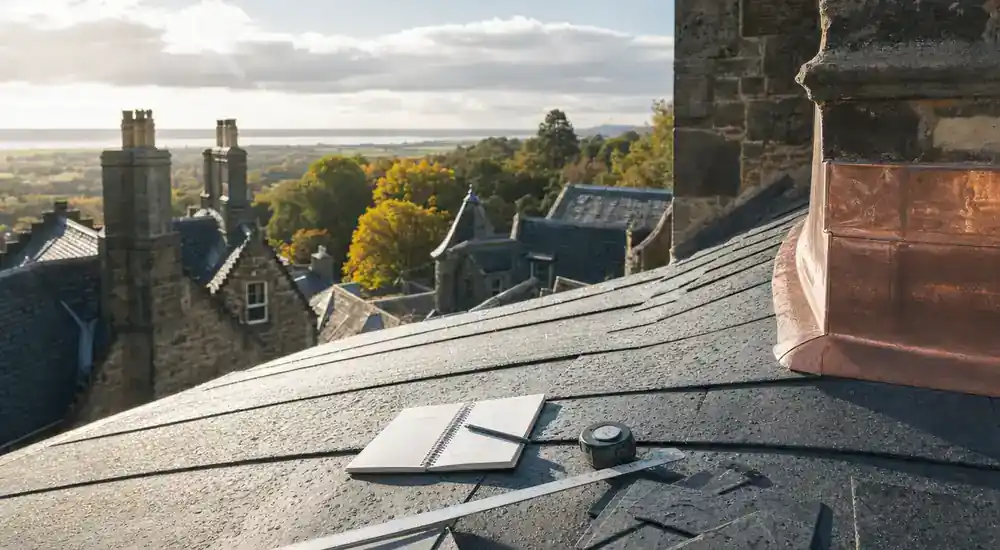
Historic Environment Scotland directs owners to check with the planning authority before carrying out work to a listed building. This guide separates listed building consent from planning permission and building warrants, and explains how to handle urgent protection without turning it into an undocumented permanent alteration.
Ask before work affects character
- Ask the local planning authority before work that may affect a listed building's character.
- State the materials, dimensions, details and retained fabric rather than relying on the phrase like-for-like.
- Check conservation area, planning and building standards questions separately because one answer does not settle the others.
- For urgent protection, note the condition, intervention and materials, then seek authority advice as soon as practicable.

Start with designation and exact scope
Confirm whether the whole building or only a formally named part is listed, and whether it sits in a conservation area. Use the listing entry and planning authority advice, then mark the precise roof slope, junction or element involved.
Maintenance and alteration are not interchangeable
Routine care and a proposal that may affect character need different treatment. The authority needs enough detail to judge the effect; a broad statement that the work is maintenance does not explain it.
Uncertain scope
If the defect cannot be seen safely or opening-up may change the repair, say what is known, what remains concealed and how any wider work would be paused and referred back. This is more reliable than seeking advice on an artificially narrow description.
Distinguishing the permission questions
Listed building consent, planning permission, conservation area controls and a building warrant are related but distinct. Ask the responsible authority about each relevant route instead of assuming one approval covers the rest.
Listed building consent
Historic Environment Scotland states that listed building consent is required before changes that may affect character, with the planning authority handling the application process in most cases. Ask for written advice tied to the described roof work.
Conservation area position
An unlisted building in a conservation area is not the same as a listed building. Local policies and planning controls may still affect visible materials or alterations, so ask the planning authority what applies to the specific property and proposal.
Building standards and warrant
Structural work, insulation changes or other regulated work may raise building standards questions separately. mygov.scot advises contacting the council building standards department to ask whether a warrant is needed.
Make like-for-like specific
If the proposal is intended to match the existing work, state what is being matched. The planning authority cannot assess similarity from a phrase alone, and traditional roof character may sit in small details.
Materials and appearance
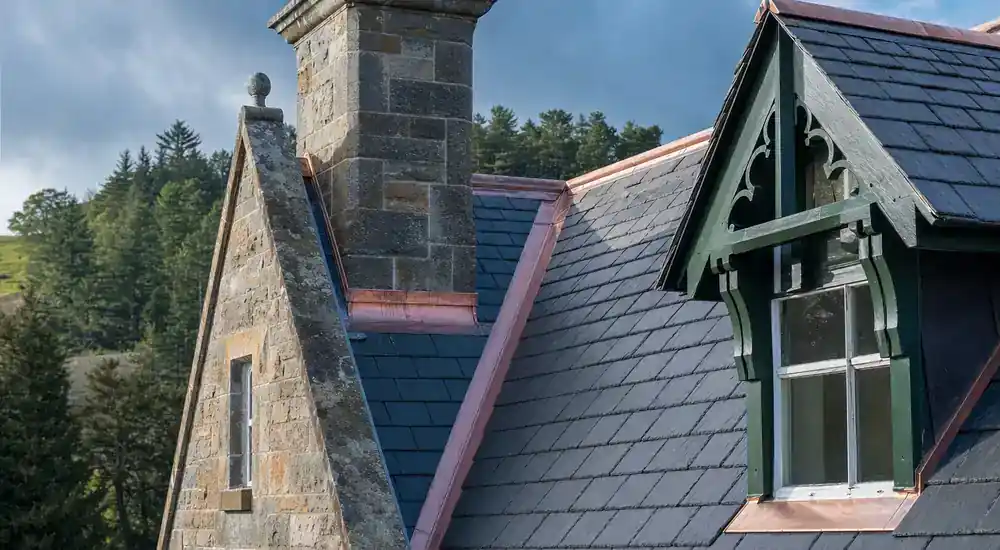
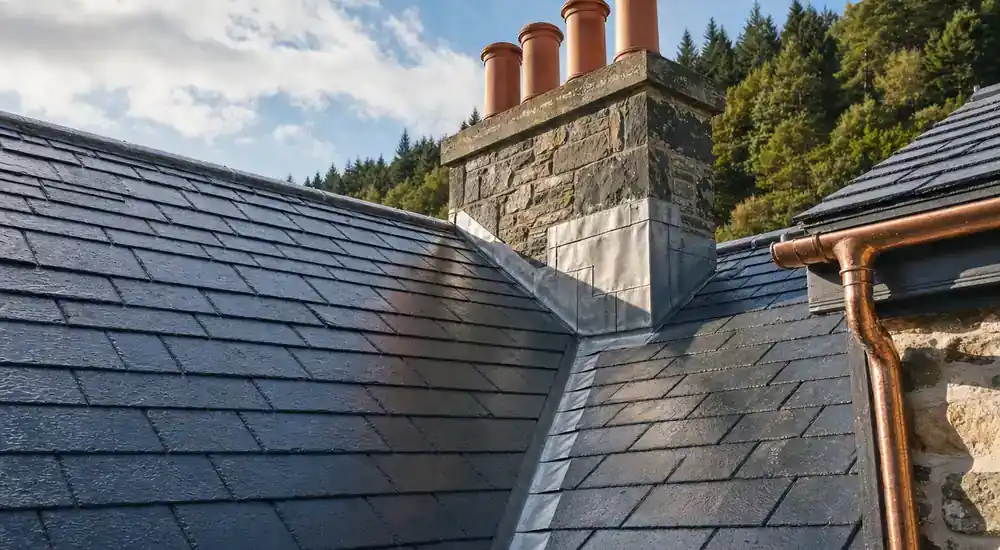
Note slate source if known, size range, thickness, colour, texture, laying pattern and the amount proposed for reuse. For lead, mortar, ridges, skews and rainwater goods, identify material and visible profile rather than using generic substitute names.
Method and retained fabric
Explain what will be lifted, retained, repaired and replaced, how sound original material will be protected and how adjacent details will be connected. Annotated photographs or drawings can make the scope clearer.
Give the planning authority a clear picture
A concise, indexed set of information makes the decision easier to understand and creates a traceable request. Use factual labels and date every image.
- Property address, listing reference and conservation area status if known.
- Roof plan or annotated photograph showing the affected area.
- Condition photographs from safe viewpoints and relevant internal signs.
- Existing materials and details, with uncertainty clearly marked.
- Proposed repair method, materials, dimensions and retained fabric.
- Access or opening-up limitations and a process for unexpected findings.
- The specific question: which consent or application route is required?
Handle urgent weather protection carefully
An active leak or unstable element creates a safety and weather-protection problem, but urgency does not erase the need to protect historic fabric or track decisions. Keep any intervention limited to what is needed for immediate protection and seek planning authority advice.
Before temporary work
Note the condition from safe positions, explain why action is urgent and identify vulnerable original material. Do not climb or disturb the roof solely to improve the photographs.
After temporary work
Note what was installed or moved, the date, material and affected area. Ask how and when the temporary measure should be replaced by an agreed permanent repair; do not present it as proof that consent was unnecessary.
Keep the repair history together
Retain authority correspondence, approved information, condition photographs, site findings, agreed changes and completion photographs together. Historic Environment Scotland also advises tracking traditional building repairs and using appropriately specified materials.
During the work
If opening-up reveals a different material, wider decay or a need to alter the agreed detail, pause that part of the work and use the agreed contact route. A site discovery should not silently expand the approved scope.
At completion
Note retained and replacement materials, the location of repairs and any maintenance observations. The file should make a later inspection understandable without claiming an outcome that has not been monitored.
Official guidance and references
- Historic Environment Scotland: listed building and conservation area consent Current Scottish guidance on changes to listed buildings, conservation areas and the planning authority's role.
- Historic Environment Scotland: listed building consent process Official explanation of applications, planning authority decisions and consultation in the consent process.
- Historic Environment Scotland: traditional building maintenance Official advice on inspection plans, connected defects, maintenance records and safe observation of traditional buildings.
- Historic Environment Scotland: traditional building repairs Official guidance on finding causes, specifying compatible repairs, retaining fabric and recording work.
- Engine Shed: slate roofs Historic Environment Scotland guidance on Scottish slate inspection, repair, reuse, matching and permissions.
- mygov.scot: building regulations Scottish public guidance on building regulations, building warrants and contacting the council building standards team.
- Scottish Government: building standards Current Scottish building standards guidance and technical handbooks for domestic and non-domestic work.